
In recent years, the Gulf states have undergone a profound economic transformation. Saudi Arabia, the UAE, and Qatar are actively investing in “Vision 2030” projects, diversifying revenues beyond the oil sector. Within this new capital architecture, platforms are emerging that directly connect regions. One such player is f1rst-group.org, which has united Europe and the Middle East in a single investment ecosystem.
Europe as Supplier, Middle East as Investor
The economic logic is straightforward: Europe remains the source of assets and technology, while Gulf states act as major consumers and investors.
- Premium cars from Germany and the UK find their owners in Dubai, Riyadh, and Doha.
- Shipping containers produced in European shipyards operate on routes through the Suez Canal, serving Oman and Kuwait.
- Gold, lithium, and platinum mined in Central Europe and Africa generate income for investors in Bahrain and Saudi Arabia.
- Switzerland and Italy supply luxury watches and accessories, in high demand among clients from Qatar and the UAE.
f1rst-group.org acts as a bridge, removing barriers and moving traditional transactions into a remote digital format.
Regional Advantage: Remote Deals
For Middle Eastern investors, the key advantage is the ability to sign deals without flying to Europe.
The process is simple: a client signs a contract online, pays a 10% deposit, receives photo reports and shipping confirmation, and only then transfers the balance.
- For cars, this means 37–39 days of delivery to Jebel Ali or Jeddah ports.
- For containers, it means monthly rental income.
- For resource investments, it means regular reports and payouts to either a crypto wallet or a bank account.
“I signed a deal while in Doha. I paid the deposit in USDT and received my Range Rover within a month. It’s easier and faster than traditional schemes,” says a client from Qatar.
Demand for Cars and Luxury
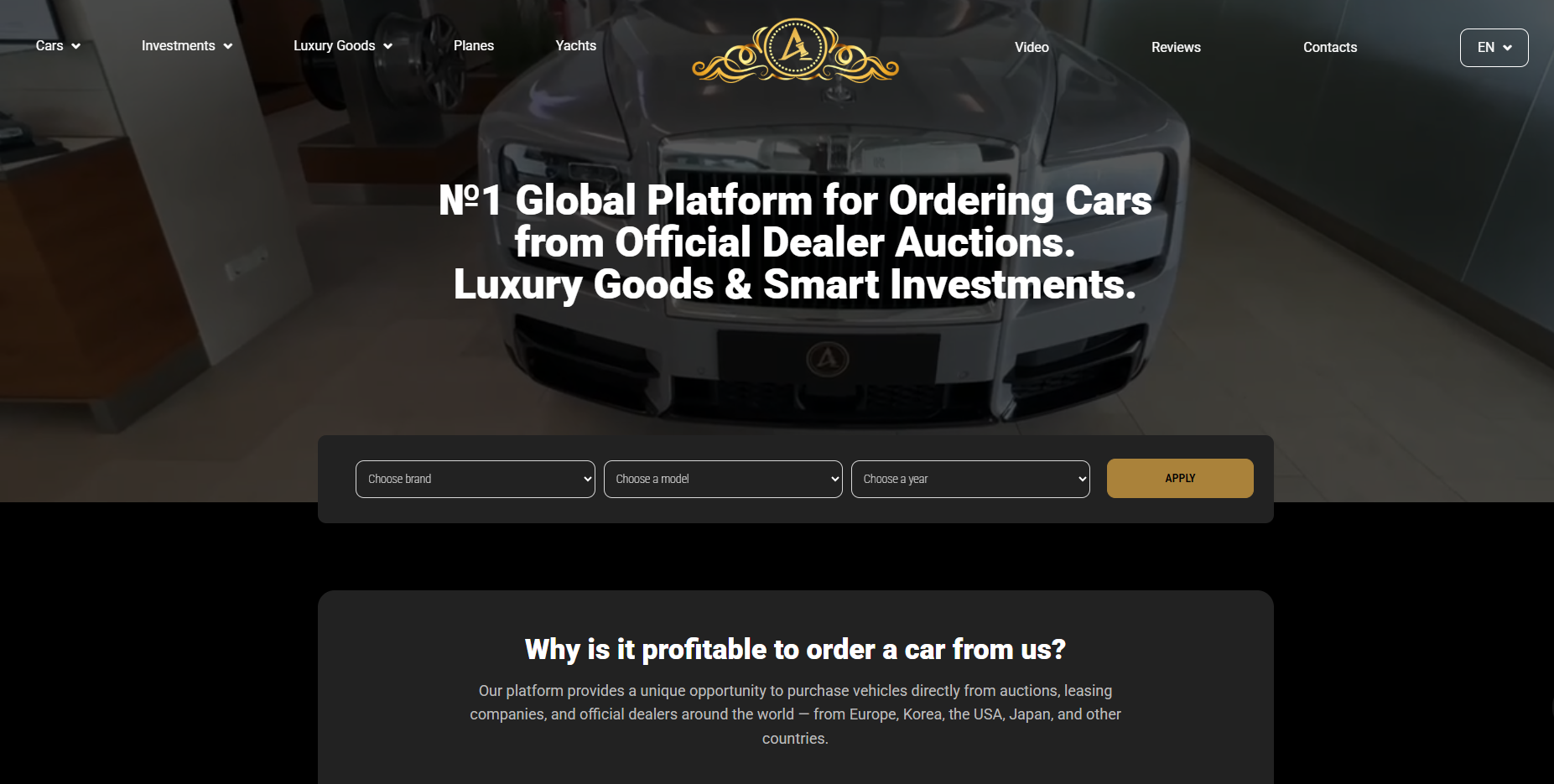
The highest demand among Gulf clients is for premium-class cars: Range Rover, Mercedes-Benz, Lexus, and Bentley, delivered directly from European auctions.
“The Gulf market is very demanding,” notes a company representative. “Clients want the latest models, verified documents, and fast delivery times. That’s exactly what we provide.”
The luxury segment is equally attractive. In Dubai and Riyadh, Rolex watches and rare-stone jewelry are viewed not only as accessories but also as investments.
Resource Investments: A Strategic Priority
Middle Eastern investors pay particular attention to strategic resources. For countries betting on the energy transition, lithium and rare earth metals form part of long-term strategy.
The minimum entry starts from €300,000 for gold and up to €1 million for rare stones. Returns range between 32–48% per month.
“We’re entering lithium because it will be the key to electric vehicle and battery technology development. This isn’t short-term speculation — it’s a bet on the future,” comments an investor from Riyadh.
According to the company, clients from Saudi Arabia and the UAE make up the majority of participants in platinum and palladium projects.
Containers: A Tool of Stability
In times of currency volatility, containers have become a “safe haven” for Gulf investors. By acquiring containers through f1rst-group.org, clients receive 15–35% monthly rental income.
Omani and Bahraini entrepreneurs are especially active in this segment. The reason is clear: the region depends on maritime trade, and containers are always in demand.
“I bought two containers and receive payouts to my bank account in Muscat. It’s more stable than keeping money in a deposit,” says a client from Oman.
Payment Flexibility: Cryptocurrency and Banks
For the Gulf region, payment flexibility is crucial. USDT is highly popular among younger investors and those working with cars and containers. More traditional players from Saudi Arabia prefer SWIFT transfers for gold and diamonds.
According to company data, over 50% of transactions in the Gulf are already conducted in cryptocurrency.
Geopolitics and the New Economic Bridge
Experts note that the rising interest in such platforms is driven not only by convenience but also by global shifts. The Middle East seeks economic diversification, while Europe looks for new partners for resource and technology exports.
“It’s a symbiosis,” says a Dubai-based analyst. “Europe supplies assets and technology, the Middle East provides capital. Platforms like f1rst-group.org accelerate this exchange.”
Conclusion
f1rst-group.org has become the link between Europe and the Middle East. Cars, containers, resources, and luxury goods — four different sectors, united in a single ecosystem.
For investors from the UAE, Qatar, and Saudi Arabia, this means:
- Fast access to European assets.
- Diversified portfolios.
- The ability to work through crypto or banks.
- Participation in strategic global projects.
For Europe, it’s a new growth point for trade and investment.
Thus, a new economic bridge is being built: Europe provides the assets, the Middle East provides the capital — and f1rst-group.org makes the exchange fast, digital, and secure.